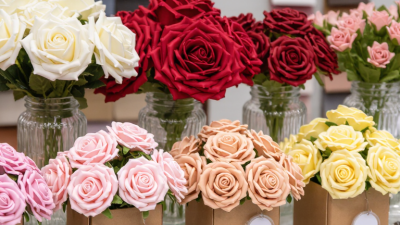
The 2026 wholesale market is making Foaming Flowers more practical, not merely decorative. Buyers now compare softness, color stability, packaging, and repeat-order consistency before choosing a supplier. Grand View Research reported that the global artificial flowers market reached approximately USD 1.75 billion in 2023, with continued growth expected through 2030. The report also highlights demand for durable, low-maintenance decorative products. That trend supports foam-based floral designs for weddings, retail displays, hotels, gift packaging, and seasonal merchandising.
J Schwanke, a U.S. floral educator and author, often reminds buyers that “Flowers are always a good idea.” The thought is simple, but wholesale reality is less romantic. A beautiful sample can still fail if petals shed, stems bend during transit, or cartons arrive compressed. Foam flowers need more than attractive photography. They require controlled density, clean cutting, stable pigments, and protective inner packaging. Smithers’ floriculture market analysis also points to changing consumer expectations around product quality, sustainability, and supply reliability. Those expectations now affect artificial floral purchasing, even when reports classify products differently.
This guide examines the best Foaming Flowers for global wholesale buyers in 2026. It considers texture, production consistency, color range, customization, minimum order quantities, and shipping performance. Some market data remains imperfect. Product categories overlap. Supplier claims also need checking. Responsible buyers should request samples, material details, packing photos, and independent quality evidence before placing large orders. A low unit price may look attractive. It may not remain attractive after damage, delays, or inconsistent replenishment.
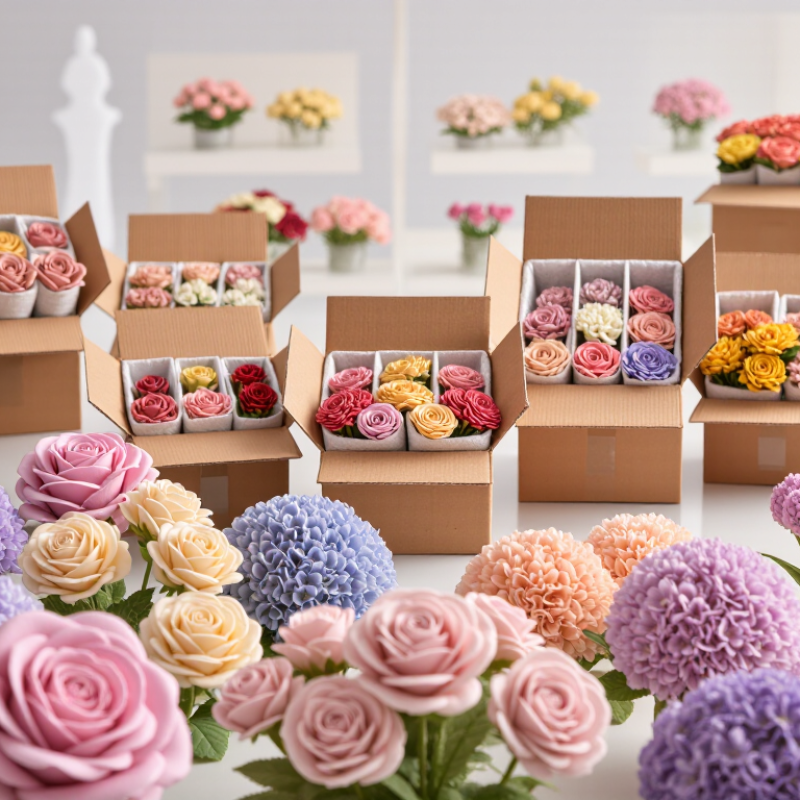
Foaming flowers are decorative blooms shaped from lightweight foam, then cut, molded, or layered to imitate petals. Unlike fresh flowers, they keep their form without water, sunlight, or daily trimming. Their soft texture can create realistic volume, especially in roses, peonies, hydrangeas, and seasonal stems.
Global wholesale buyers choose them for practical reasons. They are easier to store and ship than fresh arrangements. They also offer stable colors and consistent sizes across large orders. Retailers can use them in home décor, event styling, gift packaging, and hospitality spaces. However, not every foam flower looks natural. Some petals appear too smooth, and certain colors may fade under strong light. That weakness deserves honest checking.
Experienced buyers usually request samples before confirming production. Inspect petal edges, stem strength, surface odor, color accuracy, and packaging protection. Measure compressed cartons carefully. A low unit price may become expensive after damage, rework, or slow sales.
Tips: Compare several densities, not only appearances. Test one sample in warm and humid conditions. Ask for production photos, color references, carton dimensions, and realistic lead times. Confirm minimum order quantities and replacement procedures in writing. Small mistakes happen. Careful records reduce larger problems.

For global wholesale buyers, foaming flowers offer lightweight volume, soft texture, and reliable decorative appeal. The main types differ by foam material, flower shape, and finishing method. EVA foam flowers are flexible and suitable for roses, peonies, and small bouquet fillers. They usually keep their form after careful packing. PE foam flowers feel slightly firmer. They work well for large petals, event backdrops, and repeated handling. PU foam flowers can provide a softer, more realistic touch, although their surface may require stricter quality control.
Popular wholesale styles include foam roses, hydrangeas, peonies, sunflowers, and cherry blossoms. Roses often sell well because their layered petals create visual fullness with fewer stems. Hydrangeas can reduce assembly time in large displays. I recommend checking petal rebound by pressing each sample for several seconds. A good flower should recover without obvious creases. Small details matter.
Import buyers should compare color consistency, stem strength, odor, packaging compression, and carton efficiency. Ask suppliers for samples from different production batches. One sample cannot reveal every production problem. Check whether pale petals remain clean after handling and whether darker colors transfer onto white fabric. Some foam flowers arrive slightly flattened, but gentle reshaping may restore them. Still, this should not excuse permanent dents or uneven edges. Buyers should record dimensions, material descriptions, packing quantities, and inspection results before placing larger orders. A practical trial order often reveals more than attractive photographs.
2026 Best Foaming Flowers for Global Wholesale Buyers?
How to Compare Quality, Design, and Production Standards
A reliable comparison starts with physical samples, not catalog images. Check petal edges, surface texture, color coverage, and stem attachment by hand. Good foam flowers should feel flexible without collapsing after gentle bending. They should also recover their shape after packing. Smell matters.
Request samples from the same production batch when possible. Measure petal size, stem length, and color against the approved specification. A small color shift can become obvious across 5,000 pieces. Ask for material information, batch records, and a documented inspection process. These details show whether quality control is repeatable, not accidental.
Design quality goes beyond attractive colors. Review petal proportions, opening angles, leaf placement, and bouquet balance. A design may look elegant in photographs but appear flat on a retail shelf. Consider local preferences, display space, packaging volume, and seasonal demand. Production standards deserve equal attention. Ask how molds are maintained, how rejected pieces are separated, and how cartons protect delicate petals during humid transport. Some suppliers offer impressive samples but weaker bulk output. I have seen this gap create costly rework. Leave room for doubt, and test a small order before scaling.
| Flower Type | Recommended Material | Typical Finished Size | Petal Thickness Target | Design and Realism Indicators | Key Quality Checks | Production Tolerance | Colorfastness Target | Packaging Recommendation | Best Wholesale Use |
|---|---|---|---|---|---|---|---|---|---|
| Foam Rose | Soft EVA foam, approximately 1.5–2.5 mm for petals | Flower head: 7–10 cm; stem: 45–70 cm | 1.5–2.5 mm with tapered edges | Layered petals, natural cupping, varied petal heights, concealed center construction | Check petal alignment, adhesive visibility, stem rigidity, and color consistency between lots | Flower diameter ±5%; stem length ±2 cm | Request ISO 105-B02 or equivalent lightfastness test; indoor-use color stability should be verified by sample testing | Protective sleeves or compartment cartons to prevent petal crushing | Wedding décor, retail bouquets, event installations, home decoration |
| Foam Peony | Low-density EVA foam with heat-shaped or molded petals | Flower head: 9–14 cm; stem: 45–65 cm | 1.2–2.0 mm to support many overlapping petals | Dense petal arrangement, soft ruffling, asymmetrical opening, realistic tonal shading | Check for flattened petals, uneven heat forming, loose centers, and excessive foam odor | Flower diameter ±6%; petal position should remain stable after 24-hour unpacking | Use batch-to-batch color cards and accelerated light exposure samples before mass production | Use shallow cartons, tissue separators, and recovery testing after compression | Premium artificial bouquets, hospitality décor, seasonal displays |
| Foam Hydrangea | Flexible EVA or PE foam with reinforced central stem | Cluster diameter: 15–22 cm; stem: 35–55 cm | 0.8–1.5 mm for lightweight individual florets | Uniform but not mechanical floret spacing, natural color gradients, full rounded cluster | Check floret count, cluster fullness, stem load-bearing capacity, and missing components | Cluster diameter ±7%; missing or detached florets should be zero in sampled units | Verify pigment uniformity across the cluster and conduct rub-resistance testing on darker colors | Use molded supports or individual sleeves to preserve the spherical form | Large arrangements, hotel décor, floral backdrops, retail display bundles |
| Foam Tulip | Medium-flexibility EVA foam with molded or heat-curved petals | Flower head: 5–8 cm; stem: 35–50 cm | 1.5–2.2 mm for a smooth cup shape | Clean cup profile, slightly pointed petal tips, matte surface, natural stem curve | Check symmetry, petal edge smoothness, stem straightness, and base attachment | Head height and width ±4%; stem length ±2 cm | Confirm color stability after rubbing and short-term heat exposure during transport simulation | Bundle by color with paper separators; avoid tight compression at the flower head | Minimalist décor, spring collections, restaurant and office arrangements |
| Foam Orchid | Thin, flexible EVA foam with shaped inner lip and reinforced stem | Flower width: 7–11 cm; spray length: 45–75 cm | 0.8–1.5 mm with controlled edge shaping | Correct sepal orientation, dimensional lip, subtle center contrast, flexible natural movement | Check petal curl recovery, center detail, spray balance, and resistance to stem separation | Flower width ±5%; spray length ±3 cm | Test printed or gradient details for rub resistance and fading under indoor lighting | Use long cartons with soft ties; do not fold the flower heads during packing | Luxury interiors, hospitality projects, tabletop arrangements |
| Foam Daisy or Sunflower | Firm EVA foam for petals with molded or textured center | Flower width: 8–16 cm; stem: 40–70 cm | 1.2–2.0 mm for petal shape retention | Even radial spacing, tapered petals, textured center, controlled variation in petal angle | Check petal count, radial symmetry, center adhesion, and deformation after carton storage | Flower width ±5%; petal count must match the approved sample | Perform dry-rub testing, especially on yellow, orange, and dark-center combinations | Use separators between heads and avoid stacking heavy cartons on top | Mass-market décor, seasonal merchandising, children’s craft and event use |
| Foam Filler Flower | Lightweight EVA or PE foam with flexible wire-reinforced stems | Individual bloom: 2–5 cm; spray: 35–60 cm | 0.6–1.2 mm for light visual volume | Natural branching, mixed bloom sizes, varied spacing, and flexible stems | Check branch attachment, wire coverage, bloom distribution, and stem flexibility | Spray length ±3 cm; branch count should match the approved specification | Use color swatches and rub tests for small petals, which may show pigment variation more easily | Bundle loosely with paper bands and use flexible cartons to protect branches | Bouquet filling, floral accessories, gift packaging, and mixed-color sets |
Foaming flower styles should match each market’s climate, taste, and retail purpose. European buyers often prefer soft neutrals, compact roses, and realistic leaves. These designs suit home décor and seasonal arrangements.
North American retailers may favor larger peonies, layered hydrangeas, and brighter mixed bouquets. Their customers often want visible volume for events and gift displays.
For Middle Eastern markets, full blooms with rich burgundy, cream, and gold tones can perform well. Strong stems and dust-resistant surfaces also matter in warm, dry environments.
Southeast Asian buyers may prefer small blossoms, pastel colors, and flexible stems for wedding décor. Lightweight designs reduce shipping pressure. However, color preferences vary between cities, so broad assumptions can mislead buyers. A sample order remains essential.
One common mistake is selecting attractive flowers without checking their foam density. Thin petals may crease during packing and lose shape after storage.
Tips: Ask suppliers for close-up photos, stem measurements, and carton details. Test flowers after compression for several days. Check odor, color consistency, and petal recovery. Mix popular styles with a small experimental range. This reduces inventory risk. It also reveals local preferences. Do not ignore packaging design. Clear inner protection helps preserve curved petals during international transit. Some buyers may need more durable packing than expected.
Wholesale pricing should begin with the complete landed cost, not the unit quote. Include flower size, density, color matching, carton volume, sampling, freight, and defect allowances. A useful comparison sheet separates product cost from packaging and delivery charges. Small differences matter when cartons contain hundreds of pieces. A cheap quotation can become expensive after reinforced cartons or rework.
Packaging must protect petals from compression, dust, and moisture. Ask for inner sleeves, corner protection, and carton drop-test results. Clear labeling should show quantity, dimensions, material information, country of origin, and handling instructions.
Packaging waste also affects buyer expectations. I have found that attractive packing is not always practical; oversized cartons increase freight costs and storage pressure.
Compliance requirements vary by destination and product use. Request current material declarations, safety data where applicable, colorant information, and test reports from an independent laboratory. Confirm that documents match the actual production batch.
A supplier should explain traceability, inspection steps, lead times, and corrective action procedures. Request a pre-production sample and a final random inspection. Photos help, but they cannot replace physical checks.
Some suppliers communicate well before payment, then respond slowly during production. That is a warning sign. Evaluate production capacity, replacement terms, payment security, and export experience together. The strongest supplier is not always the lowest-priced one. It is the one that documents limitations honestly and improves after feedback.