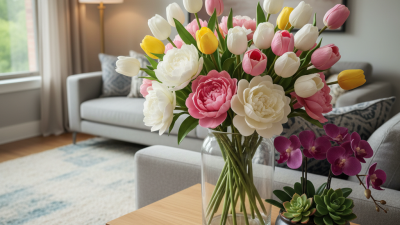
Choosing silk flowers for wholesale is not simply a matter of picking attractive colors. Buyers also need to consider stem quality, finish, durability, and how each design fits a customer’s needs. A rose with neatly layered petals may suit wedding orders, while a flexible tulip can work well in everyday arrangements. Small differences matter.
This guide introduces ten popular types of Silk Flowers, including roses, peonies, hydrangeas, tulips, orchids, lilies, daisies, cherry blossoms, sunflowers, and eucalyptus. Each has a different shape, texture, and visual role. A full hydrangea head can add volume quickly; eucalyptus stems can soften an arrangement without competing with larger blooms. These are practical patterns, not fixed rules. Customer preferences and local seasons can change what sells.
For wholesale buyers, product photos are only a starting point. Request samples when possible, then check petal edges, color consistency, wire flexibility, and how stems look under ordinary indoor light. Touch matters, too. Some fabrics feel convincing from a distance but look overly glossy up close. That takes testing. Packaging and stem length deserve attention because they affect storage, shipping, and arrangement work. A reliable supplier should describe materials clearly and provide consistent product details, though quality can still vary between batches. It is worth asking questions before placing a large order. No single flower suits every market, and even a beautiful sample may not predict every shipment. The following overview offers a grounded starting point for comparing styles and selecting assortments with care.
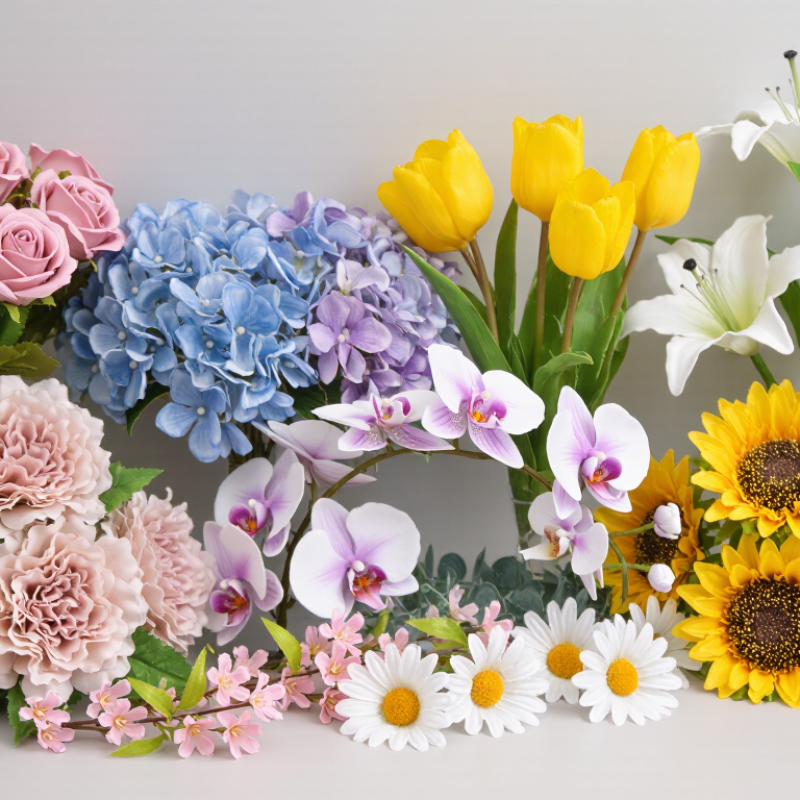
Silk flowers are artificial blooms made mainly from textile materials such as polyester. “Silk” is often a trade term, not a guarantee of natural silk fiber. For wholesale buyers, that distinction matters: fabric, wire gauge, stem length, and colorfastness affect appearance and handling. A rose head should keep its shape after unpacking. Leaves should stay attached when stems are bundled. Test a small sample first. Even then, a sample may not represent every carton.
Wholesale buyers use these flowers for retail bouquets, event arrangements, hotel displays, and seasonal décor. They often compare stem height, head size, color consistency, and pack quantities before choosing an assortment. Grand View Research’s Artificial Plants and Flowers Market report estimated the broader global market at USD 1.7 billion in 2023 and projected 4.5% annual growth from 2024 to 2030. That figure covers artificial plants and flowers, not silk flowers alone. Buyers can use it as market context, not a direct demand forecast for one flower type. In practice, realistic petals may sell well, but they can also show dust more clearly. That trade-off deserves a shelf test.
In the artificial-flower trade, “silk flowers” is commonly used as a general term for realistic-looking faux flowers. Many are made from polyester or other synthetic fabrics rather than natural silk. Material, construction, color, and dimensions can vary by product.
| Flower Type | Typical Appearance and Features | Common Wholesale Uses | Buying Considerations |
|---|---|---|---|
| Rose | Layered petals and a familiar, rounded bloom; available in many colors and bud-to-open stages. | Wedding and event arrangements, bouquets, retail bunches, and home décor. | Compare bloom diameter, stem length, petal finish, and color consistency across cartons. |
| Peony | Large, full flower head with numerous overlapping petals and a soft, abundant look. | Statement centerpieces, bridal bouquets, seasonal displays, and premium décor arrangements. | Check head size and weight, since larger blooms may require sturdier stems and more storage space. |
| Hydrangea | A rounded cluster composed of many small florets; often sold as a single large head on a stem. | Filler in bouquets, table arrangements, retail bunches, and large-scale event installations. | Review cluster fullness, floret attachment, and the dimensions of the head and stem. |
| Tulip | Smooth, cup-shaped bloom on a relatively simple stem; commonly offered in closed or partly open forms. | Spring-themed displays, everyday bouquets, grocery or floral retail, and seasonal décor. | Confirm bloom shape, stem flexibility, and whether stems can be reshaped safely for arrangement work. |
| Orchid | Distinctive sculptural blooms, often arranged along an arching stem; popular varieties include phalaenopsis-style forms. | Hospitality décor, interior displays, gift arrangements, and contemporary event designs. | Inspect bloom attachment, stem profile, and overall balance; longer stems need suitable packaging. |
| Lily | Prominent, outward-facing petals and noticeable stamens create a large, recognizable bloom. | Formal arrangements, sympathy designs, seasonal retail, and tall vase displays. | Compare the number of blooms per stem, petal finish, and the appearance of stamens and leaves. |
| Daisy | A central disk surrounded by narrow petals, giving the flower a simple, open shape. | Casual bouquets, spring and summer merchandising, craft projects, and everyday décor. | Check petal alignment, center color, and stem durability when products will be handled frequently. |
| Sunflower | Large circular center with bright, radiating petals; often made with a sturdy stem and broad leaves. | Autumn displays, rustic arrangements, event décor, and seasonal retail collections. | Verify head diameter and stem strength, especially for large blooms used in freestanding displays. |
| Carnation | Compact flower head with ruffled, densely layered petals and a comparatively long vase-style stem. | Mixed bouquets, event work, retail bunches, and arrangements requiring repeatable flower shapes. | Assess petal density, head size, and color uniformity when ordering larger quantities. |
| Baby’s Breath | Fine branching stems with many small blossoms, typically used to add lightness and texture. | Bouquet filler, wedding installations, wreaths, and small decorative arrangements. | Check branch density, stem branching, and packaging to reduce tangling or damage during shipping. |