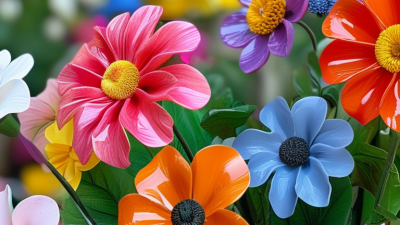
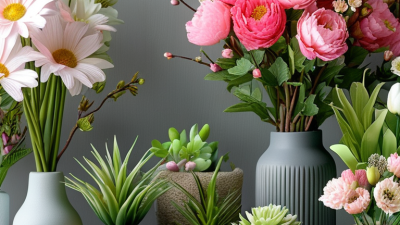
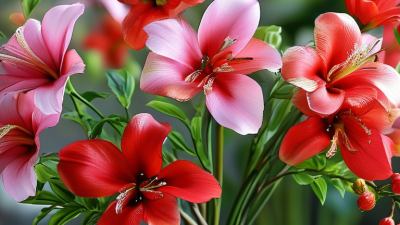
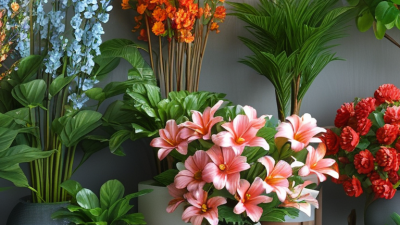
Wholesale buyers are rethinking how they source Decorative Flowers. Retailers now want products that look distinctive, remain commercially reliable, and support seasonal merchandising. Color matters. So does vase life, packaging, and delivery consistency.
Industry data supports this shift. Grand View Research’s 2024 floriculture analysis identifies continuing growth in global flower demand, supported by online retail, hospitality, and event decoration. Its findings also highlight premium varieties and stronger visual presentation as important market drivers. The Royal FloraHolland Annual Report 2024 shows how international flower trading depends on efficient auctions, digital purchasing, and dependable logistics. These factors directly affect wholesale margins. A beautiful flower that arrives bruised is not a successful product.
The USDA Floriculture Crops 2023 Summary provides another useful reference for buyers evaluating domestic production, sales values, and crop categories. It reminds us that availability can vary sharply by region and season. That limitation deserves attention. Market reports often group fresh, preserved, and artificial products differently, making comparisons imperfect. Buyers should verify the original methodology before making large purchasing decisions.
This guide examines decorative roses, hydrangeas, peonies, lilies, dried grasses, and realistic artificial stems. Each option serves a different purpose. Roses offer broad recognition and dependable demand. Hydrangeas create volume in arrangements. Dried botanicals reduce replacement frequency. Artificial flowers provide stable color for long-term displays.
The best wholesale choice is rarely the cheapest stem. It is the product that balances appearance, durability, customer demand, and handling costs. Small details matter, including stem length, bloom maturity, carton protection, and moisture control. This overview helps buyers compare those details with greater confidence.
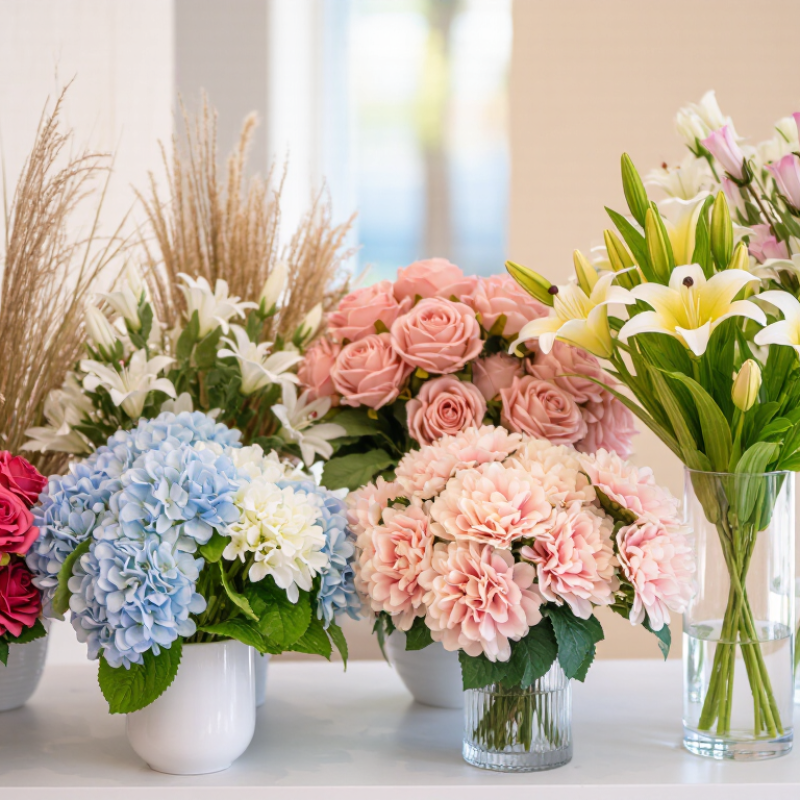
Wholesale buyers commonly choose roses, carnations, chrysanthemums, and hydrangeas. These flowers suit weddings, hotels, retail displays, and seasonal events. Roses offer familiar colors and strong visual appeal. Carnations handle transport well and can reduce replacement costs. Chrysanthemums provide generous volume, while hydrangeas create large focal shapes.
In my purchasing experience, stem length and opening stage matter as much as color. A beautiful flower arriving too open has limited selling time. Not every shipment performs.
Gerberas bring bright color, but their hollow stems need careful hydration. Lilies attract buyers with large blooms and fragrance, although pollen may stain fabrics and display surfaces. Baby’s breath remains popular for filler work because its branches create a soft, airy texture. Seasonal flowers can offer better margins, yet supply and appearance may change quickly.
Buyers should inspect bunch weight, bruising, leaf condition, and water quality before accepting delivery. Photos help, but they cannot show stem firmness or scent accurately. That limitation matters.
Dried grasses, preserved flowers, and decorative foliage are also common wholesale choices. They provide longer storage and support arrangements outside fresh-flower seasons. However, color fading, dust, and brittle stems can reduce their value.
Artificial flowers offer consistent shapes, but buyers should check material quality, seam details, and surface texture. I have seen attractive samples look less convincing in larger quantities. Small trial orders are safer.
Storage conditions still deserve attention, especially humidity and direct sunlight. Wholesale selection is rarely based on appearance alone.
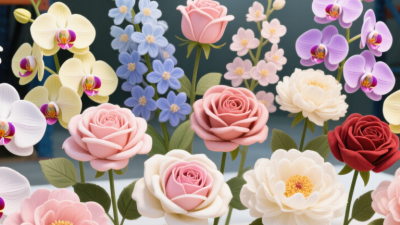
Wholesale buyers should match decorative flowers to the buyer’s real use, not only to appearance. Event decorators often need uniform stems, strong color, and reliable opening times. Retailers usually value vase life, compact packaging, and low shrinkage. Interior stylists may prefer dried or preserved materials because they reduce replacement work. The USDA Floriculture Crops 2023 Summary reported approximately $6.7 billion in U.S. wholesale floriculture sales. That scale shows why small quality differences can affect large purchasing decisions.
Seasonality remains critical. Local availability can improve freshness, while imported flowers may offer wider color choices. Buyers should compare stem length, bloom stage, moisture tolerance, and carton density. Ask for trial samples before placing a full order. Measure how flowers perform after transport, not only in the warehouse. The Global Flower Market report by the International Trade Centre also highlights international trade flows as a major factor in flower sourcing. Still, data cannot predict every shipment. I have seen attractive flowers lose value when cartons arrived too warm.
Tips: Build a simple scorecard. Rate appearance, vase life, damage rate, shipping cost, and replacement risk. Keep records by season. Choose resilient varieties for long routes, and delicate varieties for nearby delivery. Leave space for mistakes. A perfect forecast is unlikely.
Typical commercial vase life helps wholesale buyers match decorative flowers with different needs, including event duration, retail shelf time, transport distance, and product durability.
Typical vase-life ranges: roses 7–12 days, carnations 14–21 days, chrysanthemums 14–21 days, alstroemeria 14–21 days, lilies 7–14 days, and gerberas 7–14 days. Actual performance depends on cultivar, harvest stage, cold-chain handling, water quality, and floral preservatives.
Wholesale buyers often choose decorative flowers by color, yet timing usually protects profit. Peonies, ranunculus, and tulips attract strong seasonal demand during spring. Dahlias and zinnias offer vivid texture through summer and early autumn. Chrysanthemums, carnations, and alstroemeria generally provide broader availability throughout the year. Local weather can still change cutting dates, stem quality, and shipment volume.
Availability requires direct communication with growers or reliable flower markets. Ask about harvest dates, bud stage, stem length, and expected quantities. Imported flowers may fill seasonal gaps, but longer transport can increase dehydration risk. Always inspect cartons for crushed stems, yellowing leaves, mold, or excessive moisture. A small trial order is safer than committing to an attractive photograph.
Shelf life depends on variety, maturity, temperature, and handling. Many cut flowers perform well for five to ten days after proper conditioning. Some varieties last longer, while delicate blooms may decline within several days. Keep buckets clean, recut stems, remove submerged foliage, and maintain stable cool storage. Avoid placing flowers beside fruit, which releases ethylene gas. My own ordering notes are not always perfect. A flower advertised as long-lasting may fail after rough transit or delayed unloading. Track actual vase life by supplier, season, and delivery condition. That record supports better purchasing decisions next time.
Wholesale buyers often choose roses, carnations, chrysanthemums, lilies, and orchids for their reliable demand and visual range. However, decorative value cannot replace measurable quality. USDA’s 2023 Floriculture Crops Summary reported nearly $6.7 billion in U.S. grower sales, showing the scale of competition. Buyers should inspect stem length, bud maturity, foliage color, pest damage, and uniformity. A consistent grade makes pricing and resale easier.
Packaging protects quality before display. Use clean, ventilated cartons with strong corner support. Sleeves should prevent abrasion without crushing petals. Moisture pads can help, but excessive water encourages decay.
Temperate flowers commonly require storage near 1–4°C, while tropical orchids may need 10–13°C. Keep flowers away from fruit and other ethylene sources. The UC Davis Postharvest Technology Center emphasizes rapid cooling, clean hydration water, and temperature control as key handling practices.
Tips: Request a pre-shipment sample. Check ten to twenty stems, not one perfect bunch. Record arrival temperature and damaged units. My practical caution is simple: attractive photos can hide weak stems or short vase life. Do not assume every flower needs the same cold room. Test the supplier’s packaging during a small trial order, then revise the specification when real losses appear.
Wholesale buyers should compare flowers and suppliers together. Roses, chrysanthemums, carnations, hydrangeas, and baby’s breath remain practical decorative choices because they offer different textures, colors, and vase-life expectations. The USDA Floriculture Crops 2023 Summary valued U.S. floriculture sales at approximately $6.7 billion, showing the market’s scale and competitive pressure. Price alone is not enough.
Request identical samples from at least three suppliers. Check stem length, bloom stage, bunch count, visible bruising, fragrance, and vase life after 48 hours. Ask for harvest dates, cooling procedures, packaging photos, minimum order quantities, and replacement terms. Royal FloraHolland’s 2023 annual report recorded roughly €5.1 billion in turnover, reflecting how international flower logistics depend on reliable volume and timing. A supplier with clear temperature records may outperform a cheaper supplier with inconsistent cartons.
Plan orders from actual sales history, not attractive catalog images. Separate weekly staples from seasonal experiments. For weddings or hotel displays, confirm quantities four to six weeks ahead, then reserve a small buffer for damaged stems. I usually test 5–10% of a planned order first. It feels inefficient, but one failed carton can cost more than the trial. Recheck forecasts before payment; my own past orders were sometimes too optimistic. Weather, holidays, and transport delays can change demand quickly. Reliable planning needs written specifications, flexible substitutions, and a documented claims process.