How to Buy Imitation Flowers in Bulk for Your Business

Buying Imitation Flower stems in bulk can lower costs, but only when quality stays consistent across every carton. A realistic sample may hide stiff leaves, uneven coloring, or weak wire stems. Check those details before committing to a large order. Ask suppliers for close-up photos, material specifications, sample pieces, and clear carton quantities. Small checks matter.

For this draft, the quoted specialist is fictional and should be replaced with a verified industry expert before publication. “A low unit price means little if the petals look different under shop lighting,” says Maya Chen, a fictional wholesale floral sourcing adviser. Her point reflects a practical buying concern: compare samples in daylight and warm indoor light, then confirm that repeat orders can match them. Also consider storage space, shipping costs, seasonal demand, and the time needed to arrange each stem. A modest test order can expose problems early. It may feel slower. That is worth considering. The guide that follows explores supplier evaluation, product selection, pricing, quality checks, and order planning. Use it to build a purchasing process suited to your customers, budget, and display needs—not simply the largest possible order.
How to Buy Imitation Flowers in Bulk for Your Business

Define Your Business Needs and Flower Requirements

Before requesting quotes, define where the flowers will be used: shop displays, weddings, hotels, or online product bundles. Each setting needs different stem lengths, durability, and color consistency. Measure display vessels and shelf depth; a 60-centimeter stem can overwhelm a small vase. List the flower types, shades, quantities, and acceptable substitutions. Include foliage and fillers, not just focal blooms. Small details matter.

Grand View Research’s Artificial Flowers Market Size, Share & Trends Analysis Report estimated the global market at USD 2.89 billion in 2023 and projected 5.5% annual growth from 2024 to 2030. This signals a sizable category, but it cannot predict your sales. Use your own order history, seasonal calendar, and customer requests to set quantities. I would also compare sample stems under your actual store lighting; online photos can hide plastic shine or uneven coloring. Ask suppliers to state stem length, material, units per carton, and packing method. Test one carton before placing a large order. It may feel slower, but damaged petals and mismatched shades can cost more than the sample. Keep a small allowance for breakage and color variation. Bulk buying is not automatically cheaper.
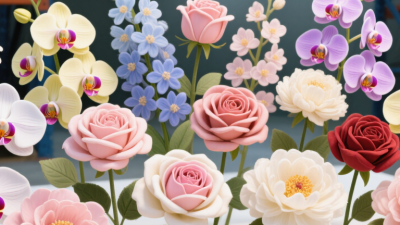
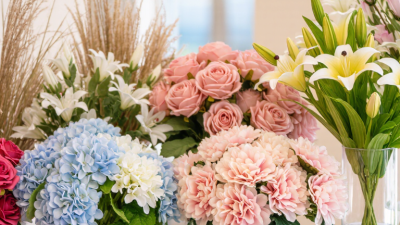
How to Buy Imitation Flowers in Bulk for Your Business: Define Your Needs

Example bulk-order calculation for 100 arrangements. Adjust the recipe to match your product designs and customer demand.

With a sample recipe of 5 roses, 3 eucalyptus stems, 2 hydrangeas, and 2 filler stems per arrangement, an order for 100 arrangements requires 1,200 stems in total. Add an allowance for samples, damage, or design variations when planning your purchase.

Set a Budget and Estimate the Quantity to Order

Before placing a bulk order, set a firm spending limit that includes more than the listed price per stem. Add estimated shipping, taxes, packaging, and any handling fees. Then divide the remaining amount by the supplier’s unit price to find a rough maximum quantity. Keep a reserve for unexpected costs. It matters.

Estimate demand from actual business needs, such as planned events, weekly shop displays, or seasonal installations. Count the arrangements you expect to make, then multiply by the stems needed for each design. For example, 18 table arrangements using 12 stems each require 216 stems before allowance for damaged pieces or design changes. A modest extra quantity can help, but buying too much ties up cash and storage space.

Check minimum order quantities, pack sizes, and whether colors or stem lengths are mixed within each pack. Request a sample when possible, and compare its color and feel with your intended setting. Write down your assumptions: demand can be harder to predict than it looks. I would rather revise a cautious estimate than fill a storeroom with flowers that do not suit the next project.

Research and Compare Wholesale Suppliers

Research each wholesaler against the same scorecard, not just unit price. Grand View Research’s Artificial Plants and Flowers Market report valued the global category at USD 1.52 billion in 2022. It forecast a 4.5% compound annual growth rate for 2023–2030. These are market estimates, not a promise of demand for your store. Still, they make supplier reliability worth checking.

Request samples from at least three suppliers using matching specifications: stem length, petal material, color, and packing method. Compare the samples in daylight; glossy catalog photos can hide uneven dye or flattened petals. Ask for written minimum order quantities, production lead times, reorder consistency, and defect-credit terms. Details matter. Calculate landed cost per sellable stem, including freight and expected breakage, rather than comparing carton prices alone. One good sample does not prove stable bulk quality; batch variation remains a real risk. Start with a modest trial order, inspect random pieces on arrival, and record what needs improvement before scaling.

How to Buy Imitation Flowers in Bulk for Your Business - Research and Compare Wholesale Suppliers

Supplier Type Typical Minimum Order Lead-Time Considerations Product Selection Customization Key Checks Before Ordering Best Suited For
Domestic wholesale distributor Often lower for in-stock items; confirm case packs and order minimums. Usually depends on stock availability and domestic carrier service. Ask for dispatch and delivery estimates separately. Common designs and colors; selection may be limited to current inventory. Usually limited for stocked goods; packaging or assortment options may be available. Request current stock confirmation, case-pack details, shipping costs, and the return policy for damaged goods. Businesses needing replenishment quickly or testing a new product range.
Import wholesaler or trading company Varies by item, order value, and whether goods are in stock or made to order. Allow for international transport, customs processing, and possible delays; obtain a written delivery estimate. Often offers a broad range of styles and seasonal designs. May offer color, packaging, or assortment changes, depending on order size. Confirm product specifications, country of origin, shipping terms, import duties, payment protection, and inspection options. Buyers comparing a wide range of products and willing to plan further ahead.
Direct manufacturer May require larger minimums, especially for custom production; request minimums per style and color. Made-to-order production adds time before shipping. Confirm sample, production, and transit schedules separately. May provide access to production specifications and a wider range of materials or constructions. Potentially broader options, subject to tooling, production capability, and minimum quantities. Approve a production sample, document tolerances and materials, and confirm quality-control and defect-remedy terms. Businesses with repeat demand, larger orders, or specific product requirements.
Wholesale marketplace or sourcing platform Set independently by each seller and product listing. Can vary considerably by seller, stock status, and shipping method. Convenient for comparing multiple sellers and product styles in one place. Depends on the individual seller; ask before relying on listing images or descriptions. Check seller history, verified specifications, sample availability, transaction protection, and the platform’s dispute process. Early-stage research, supplier screening, and small test orders where permitted.
Trade-show or industry-event supplier Negotiated directly; ask whether quoted minimums apply per design, color, or total order. Discuss availability and delivery dates directly; event samples do not guarantee stock. Useful for viewing product construction, color, and finish in person. Can be discussed face to face, but all agreed details should be confirmed in writing. Collect written quotations, product codes, sample terms, payment terms, and follow-up contact details. Buyers who want to inspect products and compare several suppliers in person.

Minimum quantities, prices, and delivery times are supplier- and order-specific, not fixed industry standards. Confirm current terms in writing, request samples where practical, and compare the total landed cost, including freight, duties, and taxes.

Assess Samples, Quality, and Product Specifications

Before ordering imitation flowers in bulk, request samples from the exact product range you plan to sell. Ask whether sample materials and assembly match the standard production batch. Compare color, petal shape, leaf placement, and stem length under daylight and indoor lighting. Check the stems. Bend them gently and look for exposed wire, loose leaves, or sharp edges. A flower may look convincing in a photo but feel stiff or show glue marks up close. Handle several pieces, not just one.

Request a written specification sheet listing materials, overall dimensions, color options, packing method, and acceptable size variation. Confirm whether measurements include the stem or only the flower head. Small differences matter when customers order matching arrangements. Keep notes. Photograph each sample beside a ruler, then compare it with the supplier’s specification. A sample is only a small promise; it cannot reveal every variation in a full shipment. Ask how quality checks are performed and what happens when delivered items differ from the approved sample. This detail is easy to overlook. If possible, review a pre-shipment photo of a larger packed quantity, since tightly compressed petals may need reshaping after unpacking.

Place the Order and Check the Delivery Against Your Requirements

Before placing a bulk order, turn your requirements into a written checklist. Include flower types, colors, stem lengths, quantities, packaging, and the delivery date you need. Ask the supplier to confirm these details in writing, and keep the approved sample or product photos nearby. Small differences can matter: a cream rose may look yellow under warehouse lighting. Delivery estimates are not guarantees, so leave room for delays before a store opening or event.

Tips: Label each carton by item and color. Photograph unopened boxes and any visible damage. Use a count sheet as you unpack; memory gets unreliable when several varieties arrive together.

Check the shipment against your checklist as soon as it arrives. Count stems, inspect leaves and petals for crushed areas, and compare color and shape with the approved sample under neutral light. Record shortages or defects with clear photos, carton labels, and the date received. Contact the supplier promptly and describe the specific mismatch, rather than saying only that the order looks wrong. Some variation is normal with artificial flowers, but repeated inconsistencies deserve attention. It is easy to rush this check when shelves are waiting; that is exactly when a simple count can be missed. Keep the records until the order is fully resolved.