How to Choose the Best PU Flowers for Wholesale?
Choosing the best PU Flowers for wholesale starts with more than appearance. Buyers need consistent color, realistic texture, secure stems, and reliable packing across every carton. A sample may look convincing under showroom lights, then appear glossy or uneven in daylight. Small flaws matter.
An illustrative composite sourcing expert, Lin Wei, offers this principle: “A low unit price means little if color, shape, and finish vary across the carton.” This is an editorial quotation, not a verified statement from a real interviewee. It points to a practical lesson: compare samples with the specifications, and ask suppliers how they control batch consistency. Check petal edges, leaf attachment, stem flexibility, and the feel of the surface. Test samples.
Wholesale decisions also depend on order quantity, lead time, packaging, and the supplier’s response to quality concerns. Request clear product photos and written details before placing a large order. Confirm dimensions and color options, too. A sample cannot reveal every production variation, and no checklist removes all uncertainty. That deserves honest attention. The following guide explains how to assess quality, compare suppliers, estimate costs, and choose PU Flowers that suit your customers and sales channel. Aim for dependable value, not the lowest quote alone.
Understanding PU Flowers and Their Wholesale Uses
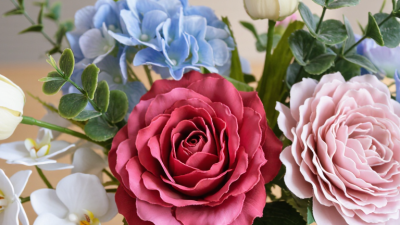
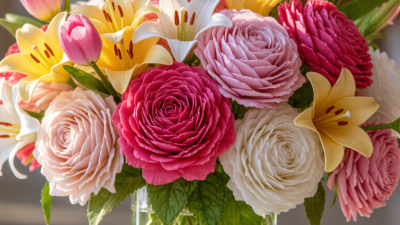
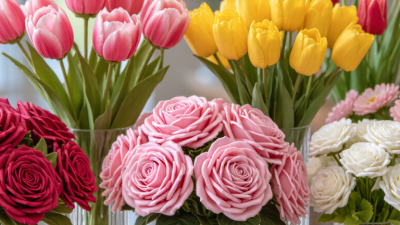
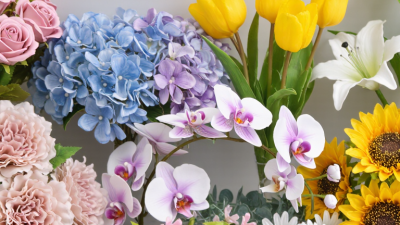
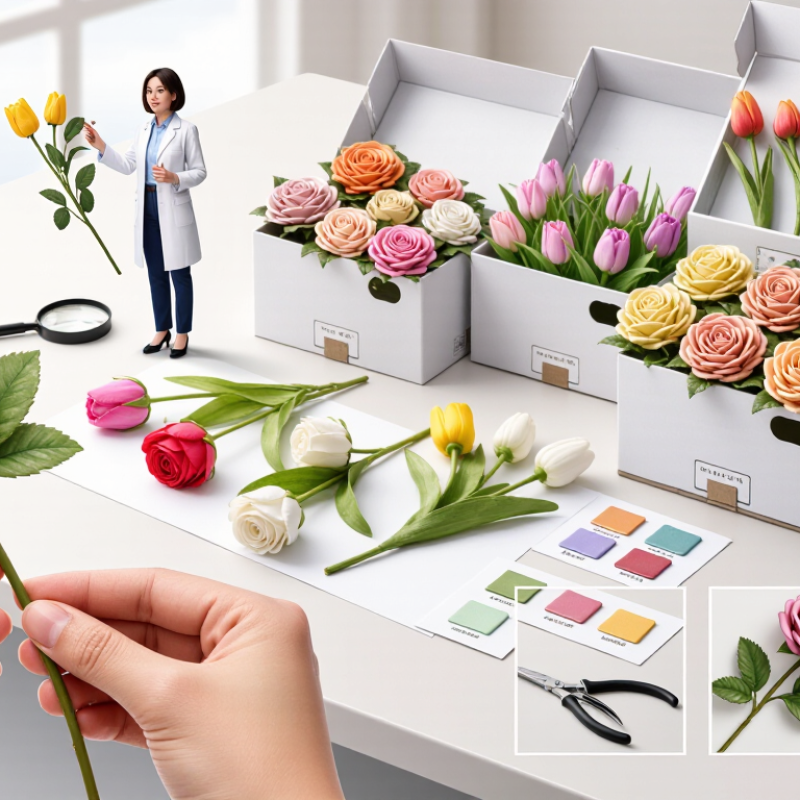
PU flowers are artificial blooms made from polyurethane, a flexible material that can hold fine petal shapes and smooth color transitions. In wholesale orders, they suit event decorators, home-goods retailers, hotels, and florists who need repeatable designs without daily watering. A carton of matching stems is useful for a wedding backdrop or a shop display that must stay consistent across several locations. They are not maintenance-free in every setting. Strong sun and heat can fade or soften some finishes, so ask about recommended placement and care.
When comparing samples, check petal edges, color on both sides, stem flexibility, and the actual flower size against the product sheet. Run a hand lightly over the petals; a stiff surface may look less natural up close. A perfect catalog photo can still mislead. Request a sample carton if possible, since tight packing may crease petals or bend stems during transit. Also confirm carton dimensions and stem counts before estimating storage or display costs. Small details matter.
PU flowers can be a practical choice for long-running displays, but realism varies by design and finish. Some leaves may look too glossy under bright shop lights, and minor seams can appear on close inspection. That is worth considering. Choose a quality level that fits the viewing distance, budget, and intended use, rather than assuming every artificial bloom will suit every setting.
How to Choose the Best PU Flowers for Wholesale? - Understanding PU Flowers and Their Wholesale Uses
| Flower Type |
Typical Wholesale Uses |
What to Check Before Ordering |
Handling and Display Notes |
| PU Roses |
Event arrangements, gift bouquets, retail displays, and home décor |
Compare petal shape, color consistency, stem finish, and the appearance of the flower center across sample pieces. |
Keep away from prolonged direct sunlight, which can cause colors to fade over time. |
| PU Tulips |
Seasonal bouquets, spring displays, and table arrangements |
Check that the buds are evenly shaped and that stems and leaves are securely attached and consistent in color. |
Store without crushing the flower heads; gently reshape petals after unpacking if needed. |
| PU Peonies |
Large bouquets, wedding décor, and statement arrangements |
Inspect petal layering, fullness, and color variation; request sample photos or a physical sample for larger orders. |
Their fuller heads need protective packaging to reduce pressure marks during shipping. |
| PU Orchids |
Hospitality interiors, reception displays, and contemporary arrangements |
Check flower spacing, stem flexibility, attachment points, and whether the design suits the intended vase or installation. |
Use a soft cloth or brush to remove dust; avoid harsh solvents unless the supplier confirms they are suitable. |
| PU Hydrangeas |
Centerpieces, venue décor, and large-volume event arrangements |
Look for even cluster coverage, secure small florets, and consistent color between stems in the same lot. |
Check head dimensions and stem length against the planned arrangement before purchasing in bulk. |
| Mixed PU Flower Stems |
Ready-to-sell bouquets, craft supplies, and mixed floral installations |
Confirm the flower varieties, stem count, dimensions, color assortment, and packaging contents in writing. |
Request a packing specification and clarify how damaged or missing items are handled. |
Wholesale tip: Before placing a bulk order, compare samples for appearance and finish, confirm dimensions and color options, and check the supplier’s minimum order quantity, lead time, packaging method, and quality-control terms. PU flowers are decorative artificial flowers; product durability and care requirements vary by design and finish.
Defining Product, Quantity, and Budget Requirements
Before requesting wholesale quotes, define what the flowers need to do. Are they for permanent shop displays, event arrangements, or seasonal window dressing? A dense peony may suit a centerpiece, while flexible stems can be easier to shape around a narrow vase. Note preferred flower types, colors, stem lengths, foliage, and finish. Photos help, but record measurements too; screen colors can be misleading.
Set a quantity by product and color, not just by total stems. For example, 300 mixed stems may sound substantial, yet leave too few of one shade for a coordinated display. Ask suppliers about minimum order quantities, carton packing, and whether samples are available. Keep samples. Check petal edges, wire flexibility, color consistency, and how the stems look under your store’s lighting. A small test order can reveal issues that a catalog photo cannot.
Build the budget around the delivered cost. Include unit price, packaging, freight, and a modest allowance for damaged or unsuitable pieces. Compare costs per usable stem, especially when bunch sizes differ. Set a firm ceiling, but leave room for a few replacement pieces. The cheapest option may have stiff leaves or uneven coloring; still, paying more does not guarantee a better match. A simple spreadsheet helps, though it cannot judge texture. I’ve found that detail easy to overlook.
Assessing Materials, Realism, Durability, and Craftsmanship
When assessing PU flowers for wholesale, look beyond color and shape. The material should feel flexible, not brittle or sticky, and petals should return to form after gentle handling. Feel the edge. A thin, sharply cut edge may look less natural and wear sooner during packing. Check for an even finish, but do not expect every petal to be identical; slight variation can make a bouquet feel more lifelike.
Realism is easiest to judge in natural light. Compare the flower head with photographs of fresh blooms, noting petal layering, color transitions, and the shape of the center. A glossy finish can flatten these details, while subtle shading often gives petals more depth. I still find color judgment difficult under warm warehouse lights. Ask to view samples near a window or under neutral lighting, and inspect several pieces from the same batch.
Durability depends on construction as well as material. Gently bend stems, turn flower heads, and check whether leaves or petals loosen at their joins. Look for clean seams, secure wiring, and stems that hold a practical display angle without cracking. Request samples from more than one carton when possible; one carefully prepared sample may not represent bulk consistency. Record any differences in shade, stem length, or attachment quality before placing a larger order. Small flaws matter.
Comparing Wholesale Suppliers, Pricing, and Order Terms
When comparing wholesale suppliers, check more than the quoted price. Grand View Research’s 2024 Artificial Flowers Market report estimated the global market at about US$1.75 billion in 2023, with projected growth through 2030. That broad estimate covers artificial flowers, not PU products alone, so it cannot prove demand for a specific design. Ask suppliers for close-up photos, material specifications, and a physical sample. Check whether petals, leaves, and stems are all polyurethane; mixed materials can change feel, durability, and cost. Small details matter.
Compare landed cost per usable stem, including packaging, freight, duties, and any inspection fees. Request written terms for minimum order quantity, sample charges, production lead time, payment schedule, and replacement or refund rules for defects. Ask how color variation is handled across batches. A low unit price can look attractive until a carton arrives with crushed petals. I would not rely on catalogue images alone. That is an easy mistake. Keep the approved sample and confirm that bulk production will match its color, finish, and dimensions. Some suppliers may quote flexible terms verbally, but unrecorded promises are hard to resolve. Get every agreed term on the pro forma invoice before paying.
How to Choose the Best PU Flowers for Wholesale
A practical supplier scorecard for comparing product quality, pricing, and order terms.
How to use it: These suggested evaluation weights are a buyer’s planning framework, not industry survey results. Compare suppliers using consistent samples and written quotes, including shipping, minimum order quantities, lead times, and payment terms.
Checking Samples, Packaging, and Delivery Before Purchasing
Before placing a wholesale order, request a production sample, not only a showroom piece. Compare petal edges, color consistency, stem flexibility, and the join between each flower head and stem. Gently bend the stems, then check whether they return without cracking or staying sharply creased. Look closely under neutral light; warm warehouse lighting can hide color differences. Ask the supplier to confirm the sample’s material, dimensions, and finish match the bulk specification. One attractive sample is not proof of consistent production. It is easy to overlook that.
Packaging deserves a physical check. Ask for a packed sample and note how stems are secured, whether petals are compressed, and how many units fit each carton. After unpacking, check for crushed blooms, loose parts, and persistent chemical odors. Request carton dimensions, gross weight, and photos of the labeled shipment before dispatch. The World Bank’s 2023 Logistics Performance Index measures six areas, including shipment timeliness and tracking. Those details matter when comparing delivery plans. UNCTAD’s Review of Maritime Transport 2024 reports that more than 80% of world trade by volume moves by sea, so allow time for transit and handling. Confirm the shipping method, dispatch date, tracking availability, and procedure for reporting damage. Keep the approved sample and written specifications for comparison when the cartons arrive.