What Are the Top Types of Fabric Flowers?

Fabric Flowers bring softness, color, and lasting character to clothing, home décor, and handmade gifts. Unlike fresh blooms, they can remain beautiful through changing seasons. Their appearance depends on more than color alone. Fabric weight, edge finishing, stitching, and shaping methods all influence the final result.

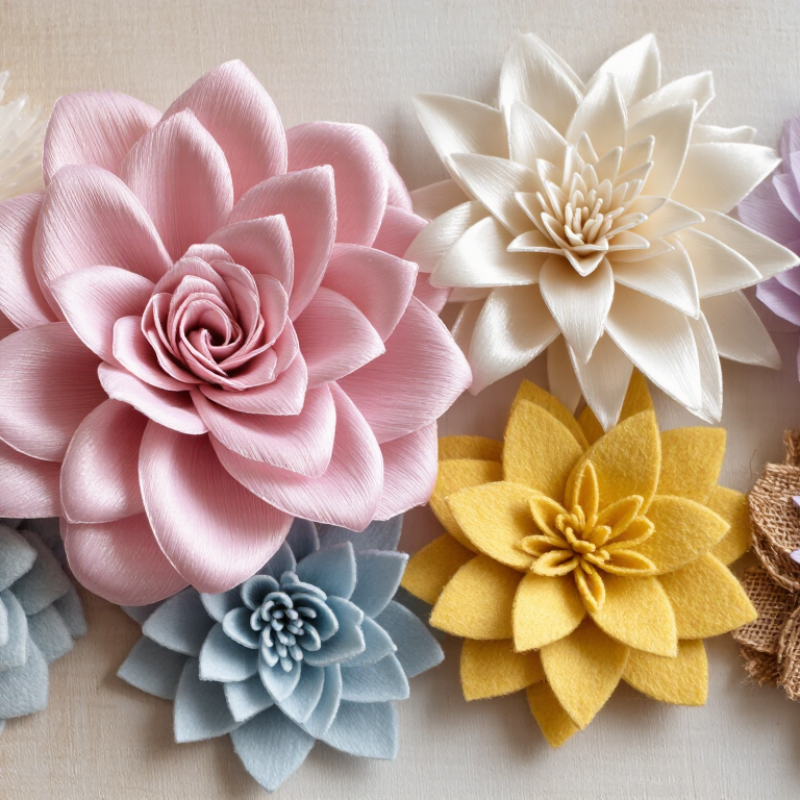
This guide examines the top types of Fabric Flowers, including silk, satin, cotton, felt, organza, and burlap designs. Each material creates a different visual and tactile effect. Silk flowers look refined and naturally fluid. Felt flowers offer structure and simple, clean edges. Organza adds a light, airy layer, while burlap creates a rustic impression. Cotton remains practical for everyday projects because it is washable and widely available.

Small details matter. A tightly rolled center can make a rose appear fuller. Heat-shaped petals may create realistic curves, but excessive heat can damage delicate fabric. I have found that beginners often choose fabric by appearance alone. That approach sometimes fails. A beautiful material may fray easily or resist shaping. Testing one petal first is wiser than cutting an entire arrangement.

The sections ahead compare each flower type by texture, durability, appearance, crafting difficulty, and suitable uses. They also consider how colorfastness, maintenance, and fabric sourcing affect long-term value. No single option suits every project. The best choice depends on the intended setting, available tools, and the maker’s patience. Even experienced crafters revise their methods. That is part of the process.
What Are the Top Types of Fabric Flowers?

What Are Fabric Flowers and How Are They Made?

Fabric flowers are decorative blooms shaped from cloth rather than living petals. Common materials include cotton, silk, linen, felt, and polyester. Makers cut petals with scissors, templates, or heated tools. They then shape edges, layer petals, and secure centers with thread or adhesive. The process resembles floral construction, but the fabric choice changes every result. Cotton holds crisp folds. Silk creates softer movement. Felt gives a bold, simple outline.

A basic rose begins with rounded petals, lightly curved by hand, and wrapped around a small fabric center. A layered daisy uses repeated petals stitched around a button-like core. Rolled flowers come from long strips twisted into coils.

Singed-edge flowers use controlled heat to curl synthetic fabric, yet this method requires ventilation and careful handling. I prefer stitching when durability matters. It takes longer, but the petals usually remain flexible after washing. Adhesive is quicker, although too much can leave stiff spots.

Top types include roses, peonies, daisies, camellias, and rolled ribbon flowers. Their appearance depends on scale, texture, and petal arrangement. A flower may look elegant in silk but heavy in thick felt.

Not every petal behaves. Early attempts often become uneven, especially around the center. That flaw can reveal handmade character, though it may need correction for a polished accessory. For reliable results, test one petal first, record the temperature or stitch spacing, and inspect the backing before attaching the flower to clothing, décor, or hair accessories.
How Are Fabric Flowers Classified by Shape and Technique?

What Are the Top Types of Fabric Flowers?

Fabric flowers are commonly classified by their shape and construction technique. Rosette flowers have spiraled petals and a compact, rounded profile. They suit hair accessories, brooches, and gift wrapping. Layered flowers use separate fabric circles, ovals, or pointed petals. Overlapping these pieces creates fuller blooms with visible depth.

Rolled flowers begin as narrow fabric strips. The strip is twisted and coiled into a tight center. Gathered flowers use running stitches to create soft, ruffled edges. Folded flowers, including pleated and origami-inspired forms, have sharper lines and a more structured appearance. Some makers shape synthetic fabric edges with controlled heat, producing curved petals. This method requires careful testing and suitable ventilation.

Technique changes the flower’s character. Cotton gives a matte, natural finish, while satin reflects light and exposes uneven stitches more clearly. In my own samples, layered petals looked attractive but became heavy when I added too many pieces. That mistake taught me to balance scale, weight, and attachment strength. Shape and technique can overlap, so one flower may be both layered and gathered.

Tips: Test one petal before cutting the full set. Mark the center lightly. Keep thread tension steady, but not tight. A small variation can make a flower look handmade, though careless spacing may appear unfinished. Check the fabric’s washing instructions before adding delicate details. Use firm backing when the flower must hold its shape.

What Are the Most Popular Types of Fabric Flowers?

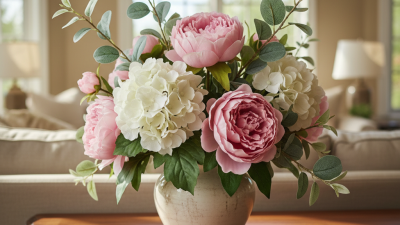
Popular fabric flowers usually fall into a few recognizable types: roses, peonies, daisies, tulips, and hydrangeas. Roses remain widely chosen because layered petals create a convincing, rounded bloom. Peonies offer fuller shapes and soft visual volume. Daisies look lighter, with narrow petals and clear centers. Tulips suit simple arrangements, while hydrangeas create dense clusters from many small florets.

Market data supports this broad preference for realistic decorative flowers. Grand View Research’s 2023 artificial flowers report projected global growth of roughly 5% annually through 2030. Fabric flowers represent only part of that market, but the trend reflects steady interest in reusable floral décor. In practical use, polyester roses are common for formal displays because they resist wrinkling. Cotton daisies feel more casual and tactile. Velvet peonies add depth under warm indoor lighting.

Material changes the result. Silk-like fabrics show delicate edges, while felt produces firmer, handmade shapes. Some flowers look beautiful online but appear too glossy in person. That is an easy mistake. I have found that petal spacing, stem flexibility, and color variation matter more than a perfect flower name. Buyers should inspect close-up photos and product measurements. A small hydrangea cluster may need several stems to appear full, while one large peony can dominate a narrow vase.

Which Fabrics and Uses Suit Each Flower Type?

What Are the Top Types of Fabric Flowers?

Fabric choice changes a flower’s shape, texture, durability, and best use. Silk flowers suit wedding bouquets, bridal hairpieces, and premium table styling. Their soft sheen resembles fresh petals under warm lighting. However, silk can crease easily and may need careful storage. Cotton flowers feel more natural and absorb dye well. They work nicely for children’s accessories, rustic décor, and handmade gift wrapping.

Polyester flowers are practical for event installations, seasonal displays, and outdoor-covered spaces. Textile Exchange’s 2024 Materials Market Report identifies polyester as roughly 57% of global fiber production. That scale supports its availability and consistent color performance. Polyester petals can also hold firm edges after heat shaping. They may look too glossy, though. Matte finishing often improves the result. Organza creates airy peonies, poppies, and layered accent flowers. Its transparent edges suit corsages, invitations, and lightweight centerpieces.

Felt flowers offer stronger structure and simple cutting. They suit brooches, nursery décor, learning projects, and low-cost retail displays. Velvet flowers provide depth for winter arrangements and theatrical styling. Their pile catches light beautifully. It also collects dust. A 2024 Grand View Research analysis projects continued growth in the artificial flowers market through 2030, with customization and long-term reuse supporting demand. That trend does not make every material sustainable. The Textile Exchange report also warns that fiber growth increases environmental pressure. I would test each flower in its real setting before production. A beautiful sample can fail beside a sunny window.

Top Types of Fabric Flowers: Fabrics and Best Uses

The ratings show practical suitability on a scale of 1–5, based on each fabric’s structure, texture, stiffness, sheen, and ease of shaping. Silk and satin suit formal accessories, while cotton, felt, and denim are better for durable everyday decorations.

How Should You Choose and Care for Fabric Flowers?

Fabric flowers look convincing when their fiber matches the setting, not merely the color. Silk flowers offer soft sheen and delicate petals for bouquets or formal styling. Cotton and linen flowers feel matte, tactile, and easier to steam back into shape. Polyester satin, organza, and felt resist frequent handling and suit clips, wreaths, and event displays. Textile Exchange’s Materials Market Report 2024 records 124 million tonnes of global fiber production in 2023; polyester represented 57 percent. That figure supports a practical choice, not an automatic one. Recycled polyester can be sensible, but verify the supplier’s material claim.

Check the edge stitching, petal memory, wire strength, and colorfastness before buying. Rub a hidden petal with a damp white cloth. Bleeding means trouble. For silk, avoid direct sun, water spots, and rough storage. For polyester, use low steam from a distance. Never press an iron directly onto petals. Cotton can tolerate gentle steaming, yet glued centers may loosen. Felt usually needs brushing, not washing. I once over-steamed a wired flower; the petal curled permanently. That mistake taught me to test one small area first.

Store flowers upright in a breathable box, separated with acid-free tissue. Avoid sealed plastic when moisture remains. Dust them with a cool hairdryer or soft makeup brush. WRAP’s Valuing Our Clothes report estimates that extending textile use by nine months can cut carbon, water, and waste footprints by 20–30 percent. Fabric flowers are smaller, but the maintenance principle still applies. Repair loose threads early. Replace only damaged petals. Mixed fibers can make care instructions uncertain. Ask about fiber content and adhesive type before cleaning.

What Are the Top Types of Fabric Flowers? - How Should You Choose and Care for Fabric Flowers?

Fabric Flower Type Common Materials Appearance and Characteristics Best Uses Durability Recommended Care Selection Tips
Silk Flowers Silk, polyester satin, or synthetic silk Smooth, soft, and naturally draping; often provides a refined and realistic appearance. Home decoration, wedding arrangements, hair accessories, corsages, and formal crafts. High Gentle cleaning
Dust with a soft brush or cool-air dryer. Keep away from moisture and direct sunlight when possible.
Choose tightly finished petals, securely attached centers, and colorfast fabric for long-term display.
Satin Flowers Polyester satin, acetate, or similar smooth woven fabrics Shiny surface with crisp edges; creates a polished and decorative effect. Gift wrapping, clothing embellishment, table settings, bouquets, and festive decorations. High Avoid heat
Remove dust gently. Do not place near high heat because satin may melt, flatten, or develop unwanted shine.
Use for designs that need sheen. Check that the fabric is not excessively slippery or loosely gathered.
Organza Flowers Polyester organza or silk organza Lightweight, translucent, and slightly crisp; produces airy petals and layered volume. Party décor, bridal accessories, hair clips, gift decoration, and lightweight wreaths. Medium to High Handle carefully
Use a soft brush or gentle shaking to remove dust. Avoid snagging the edges and store flat or loosely covered.
Select evenly cut petals with clean edges. Layered organza works well when a soft, floating look is desired.
Chiffon Flowers Polyester chiffon or silk chiffon Soft, sheer, and flexible with naturally flowing edges; gives a romantic and relaxed appearance. Scarves, clothing details, bridal wear, hair accessories, and soft decorative arrangements. Medium Minimal handling
Use cool air or a clean, soft brush. Avoid pulling the fabric, rubbing the petals, or exposing it to rough surfaces.
Choose chiffon when softness and movement matter more than firm structure. Inspect seams and petal edges for fraying.
Felt Flowers Wool felt, wool-blend felt, or acrylic felt Opaque, structured, and easy to shape; offers a textured, handcrafted appearance. Brooches, children’s crafts, seasonal décor, wreaths, banners, and fabric ornaments. High Keep dry
Remove lint with a soft brush or lint roller. Avoid soaking, which can distort some felt fibers.
Choose thicker felt for three-dimensional flowers and thinner felt for layered petals or small applications.
Cotton Flowers Cotton broadcloth, muslin, calico, or printed cotton Matte, breathable, and versatile; can look rustic, casual, or contemporary depending on the print and finish. Quilting, country-style décor, fabric baskets, clothing accessories, and everyday craft projects. High Spot clean
Blot small marks with a slightly damp cloth and mild soap. Air-dry fully and avoid prolonged direct sunlight.
Choose tightly woven cotton for cleaner shapes and printed cotton when coordinated color or pattern is important.
Linen Flowers Linen or linen-blend fabric Natural texture with a slightly irregular surface; creates an understated, organic look. Rustic weddings, table décor, home accessories, brooches, and neutral-toned arrangements. High Prevent creasing
Dust gently and reshape by hand. If needed, use low-temperature steam from a safe distance.
Select linen for a natural aesthetic. Check the weave and edge finishing because loose fibers may fray during repeated handling.
Velvet Flowers Cotton velvet, polyester velvet, or velour Soft, dense, and dimensional with a rich surface that absorbs and reflects light differently by direction. Winter décor, formal accessories, brooches, hairpieces, and dramatic floral arrangements. Medium to High Protect the pile
Dust with a soft brush in the direction of the nap. Avoid crushing, water spots, and prolonged pressure.
Choose velvet for depth and luxury. Examine the pile for consistent direction and ensure the petals hold their shape.
Tulle Flowers Nylon tulle or polyester tulle Fine net structure with a light, airy appearance; creates volume without adding much weight. Tutus, party décor, bridal accessories, hairpieces, gift bows, and layered bouquets. Medium Avoid snags
Store away from sharp objects and use cool air or gentle shaking to remove dust.
Use multiple layers for fuller petals. Choose a softer tulle for wearable items and firmer tulle for structured decorations.
Denim Flowers Cotton denim or recycled denim fabric Firm, durable, and casual with visible twill texture; suitable for bold, long-lasting designs. Bags, jackets, hair accessories, home décor, brooches, and upcycling projects. Very High Limit moisture
Brush off dust and spot clean when possible. Allow the flower to dry completely before storage.
Choose lightweight denim for easier shaping and heavier denim for large statement flowers or durable accessories.